Introduction
What if science class could inspire creativity, and art class could deepen scientific understanding? In my classroom, that’s exactly what happens. One of my favorite cross-curricular projects blends chemistry and art, where students personify elements from the periodic table and design human characters based on their scientific properties. This project transforms abstract scientific concepts into tangible, visual representations, reinforcing learning through creativity.

This idea was inspired by artist Kaycie D., who created the Periodic Table of Elements Character Design series. Her work, which can be found here, showcases how chemistry can be creatively reimagined through character design.
The Power of Project-Based Learning
Project-Based Learning (PBL) is an instructional approach that encourages students to explore real-world problems, develop solutions, and create meaningful projects. Rather than memorizing facts, students engage in inquiry, research, and hands-on application. By integrating science and art, this project allows students to move beyond rote learning and into deep conceptual understanding.
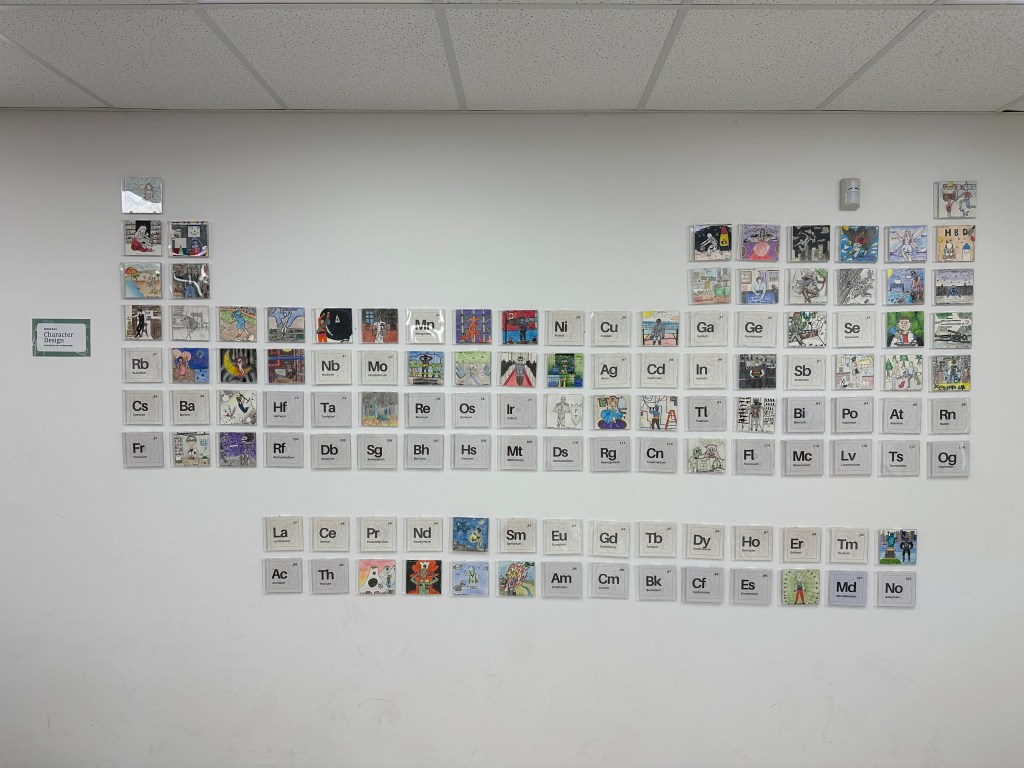
The Periodic Table Character Design Project
This project begins in science class, where students research an assigned element from the periodic table. They learn about its atomic structure, common uses, properties, and historical significance. Then, they bring their findings to art class, where the real magic happens.
The research process is key: students gather detailed information about their element’s behavior, function, and interactions in the real world. Then comes the brainstorming phase—students analyze how these scientific traits can be transformed into human characteristics. Is the element reactive? Maybe it’s an energetic, unpredictable character. Is it used in construction? Perhaps a builder or architect. This back-and-forth between science and imagination sparks creative thinking and requires students to internalize the element’s properties before they can represent them visually.
Students personify their elements by designing human characters that visually represent their chemical properties. For example:
- Sodium (Na): A professional chef, reflecting its common use in cooking and table salt.
- Neon (Ne): A glowing nightclub performer, embodying its luminescent qualities.
- Iron (Fe): A strong, armor-clad warrior, symbolizing its strength and industrial importance.
While creating their characters, students also explore human anatomy and figure drawing, reinforcing skills in proportion, action poses, and expressive design. The final product is a character that not only showcases artistic skill but also demonstrates a deep understanding of the element’s properties.
How Art Enhances Learning in Other Subjects
Integrating art into science fosters engagement, creativity, and critical thinking. Here’s how:
- Visualizing Abstract Concepts: Scientific properties can feel intangible, but personifying elements makes them relatable and easier to remember.
- Encouraging Deeper Research: Students must fully understand their element before translating it into a design, reinforcing comprehension.
- Developing Creativity and Problem-Solving Skills: The challenge of converting scientific data into visual storytelling strengthens both artistic and analytical thinking.
- Making Learning More Enjoyable: When students have creative ownership of their projects, they become more invested in the learning process.
Step-by-Step Guide for Educators
1. Science Class Introduction:
- Assign each student an element from the periodic table.
- Guide them in researching their element’s atomic number, symbol, properties, common uses, physical state, reactivity, and historical facts.
- Have students compile their notes in a science journal or worksheet.
2. Brainstorming Bridge:
- Encourage students to consider how their element might behave as a person based on its scientific characteristics.
- Ask guiding questions: Would this element be calm or chaotic? Hard or soft? Shiny or dull? Where would it live? What would it wear?
3. Art Class Integration:
- Teach or review figure drawing techniques and action poses.
- Introduce the character design template: front view, color palette, key accessories, and a short character description.
- Support students in sketching and revising their ideas based on feedback.
4. Final Project Creation:
- Allow time for students to complete a polished illustration of their character.
- Have them write a short paragraph explaining their design choices and how they relate to the element’s scientific traits.
5. Showcase and Reflect:
- Display the characters in a classroom gallery or digital slideshow.
- Encourage students to present their characters and reflect on what they learned from the project.
Conclusion
Art is a powerful tool for interdisciplinary learning. By blending science with creativity, students engage more deeply, think critically, and have fun in the process. This project not only helps students learn about chemistry but also fosters artistic growth and problem-solving skills that extend far beyond the classroom.
Inspire students by showing that creativity and analytical thinking are valuable across multiple fields—from design and education to healthcare, engineering, and beyond. When students see the connections between disciplines, they begin to understand that learning is not limited to subject silos, but is part of a bigger picture that encourages curiosity, expression, and innovation.
Have you tried integrating art with other subjects? I’d love to hear about your experiences in the comments!

 123ArtAppetit
Leave a comment