
There’s something oddly intimidating about a blank page.
Even as someone who’s trained in the arts and teaches it full-time, I’ve had those moments where I stare at a fresh, beautiful sketchbook and think… What if I mess it up?
And it’s wild, because I say this to my students all the time: “There’s no such thing as messing up in your sketchbook.” But the truth is—I’ve been there. I still go there.
I used to think I had to have a clear idea before I put pencil to paper. That a sketchbook was only for “real” drawings—clean lines, planned compositions, finished thoughts. But that mindset is what kept me from drawing at all. I was so focused on making something good that I forgot how to make anything.
That’s where doodling saved me.
So… What’s the Difference Between Doodling and Drawing?
Honestly? Not as much as you think.
People tend to treat doodles like the underdogs of the art world—like they’re lazy, mindless, or somehow not real art. But doodling is drawing. It just comes from a different headspace.
Drawing, to me, is more intentional. It’s when I’m planning a composition, studying a subject, or pushing my technique. But doodling is looser. It’s spontaneous, playful, sometimes messy, and often subconscious. I doodle when I’m on the phone, in meetings, or when my brain just needs to wander.
And here’s what I’ve learned: doodles are where some of the best ideas begin.
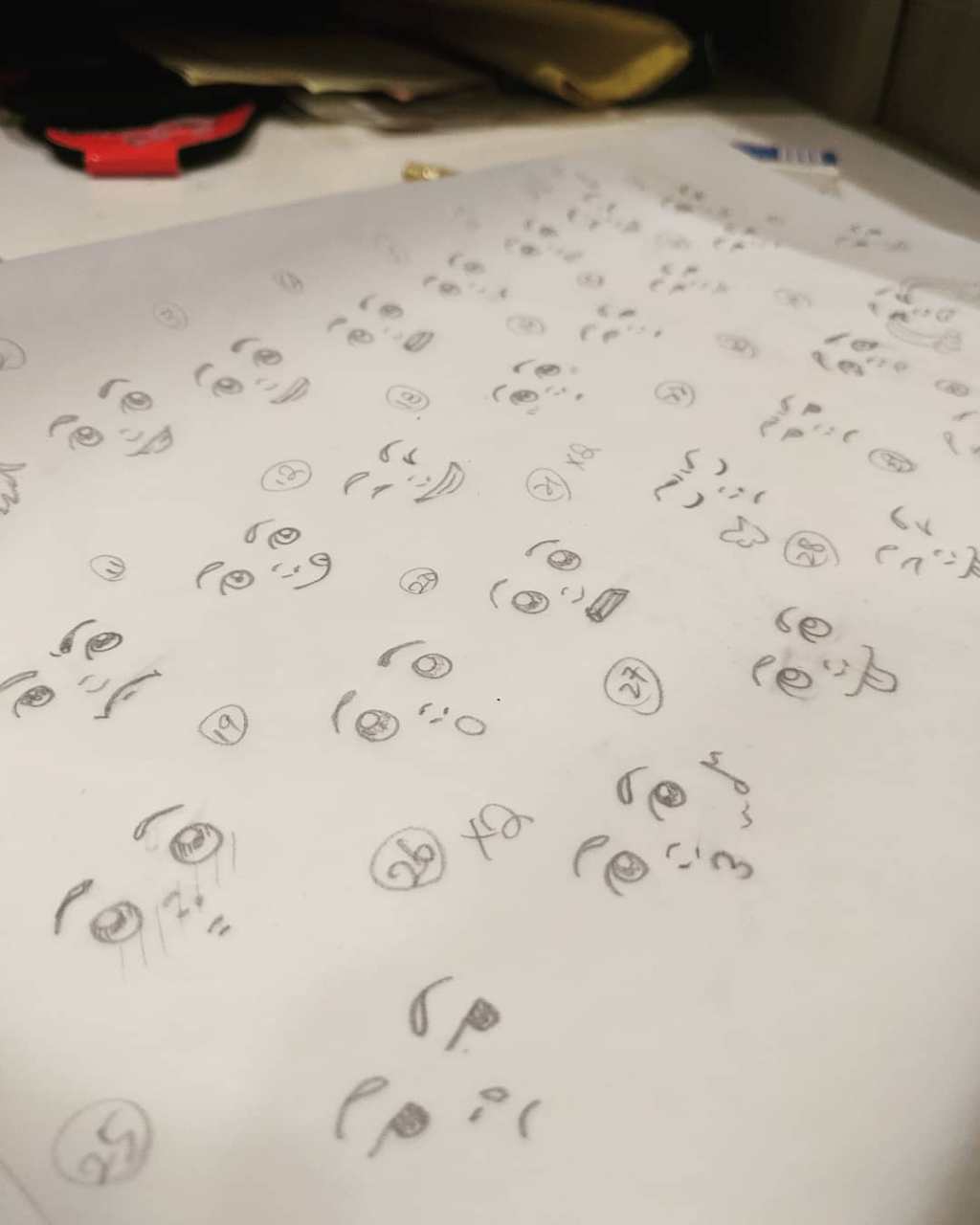
I’ve turned random scribbles into characters, shapes into patterns, and messy sketches into finished pieces. Doodling doesn’t require purpose—it creates purpose.
There’s a freedom in that. It removes the pressure and brings you back to that childlike curiosity where the page isn’t scary, it’s just waiting.
The Pressure to Make “Real” Art
Let’s talk about this idea that if it’s not “good,” it doesn’t count.
I’ve had students—especially teens—tell me they ripped out pages of their sketchbooks because they didn’t like how something looked. I get it. We’re constantly bombarded with polished content on social media. It’s easy to think your work isn’t valid unless it looks portfolio-worthy.
But sketchbooks aren’t meant to be galleries. They’re meant to be labs—places for trial and error, experiments, flops, and surprises. My sketchbooks are full of unfinished pieces, awkward faces, ink smudges, weird proportions, and notes in the margins. And I love them for that.
I still have to remind myself that ugly pages are part of the process. That the act of drawing—even if the result is awkward or boring—is what keeps the creative muscle strong.
The Blank Page Struggle
“I haven’t done anything creative in years. I’d love to get back into it, but I feel winded too easily.”
I’ve heard this. I’ve felt this. After becoming a teacher, I went through a long stretch where I wasn’t producing personal art. I was so focused on supporting my students, planning lessons, and being present for others that I forgot to save space for myself.
And honestly? I started to question if I was still an artist.
I missed the feeling of being connected to my own ideas. I missed making something that was just for me. But every time I tried to start again, I froze. The page felt too big. My hands felt clumsy. The first few sketches didn’t look how I imagined. And that perfectionist voice in my head would whisper, “See? You’ve lost it.”
But I hadn’t lost it. I just needed to start smaller.
That’s where this list comes in—things to draw when you don’t know what to draw. Low-pressure, everyday prompts that remind you that even the most boring sketch counts.
10 Things to Put in Your Sketchbook When You Don’t Know What to Draw
These are things I do when I’m creatively stuck, emotionally drained, or just trying to build the habit again. No masterpieces required.
- Your Coffee Mug (From Different Angles)
It’s familiar, it’s there, and drawing it a few times forces you to actually look at it—not just its shape, but its shadow, reflection, even the way you hold it. - What’s in Your Bag or Pockets
Dump it out and draw everything. Pens, keys, a random receipt. These little things tell a story. - Turn Random Shapes Into Characters
Scribble a bunch of blobs, then turn them into creatures, people, monsters, or whatever comes to mind. - A Visual To-Do List
Instead of writing “laundry” and “grocery run,” draw icons. A sock, a shopping cart, a notebook. It’s weirdly fun! - The View From Where You’re Sitting
Don’t try to draw the whole room—focus on a corner, a chair, a plant, the light through the window. - A Memory You Keep Thinking About
Doesn’t have to be literal. Sketch how it felt. Use symbols, colors, scribbles—whatever helps you process it visually. - Objects You Use Every Day
Try drawing your toothbrush like it’s a sci-fi prop. Or your headphones like they’re made of vines. Let your imagination tweak reality. - Abstract Doodles While Listening to Music or a Podcast
Just let your hand move. See what comes out. It’s meditative and surprisingly revealing. - “Draw Your Day” Comic Panel
One box, one moment from your day. It could be brushing your teeth, something funny that happened, or a moment that made you pause.
Or, Simply Keep Ongoing Lists of What You Love (and Want) to Draw
One of the simplest but most powerful things I’ve done for my sketchbook habit is keeping a running list of things I enjoy drawing—alongside a list of things I want to get better at.
Sounds obvious, right? I keep a few lists in the back of my sketchbook (sometimes I even tape in a sticky note), and they include things like:
- Things I love drawing:
- Cartoon faces of my coworkers, students and friends
- Flowers and plants with weird leaf shapes
- My breakfast, lunch, dinner
- Animals in human outfits (yes, really!)
- Things I want to learn how to draw or get better at:
- Hands (ugh, the struggle!)
- People in dynamic poses
- Folds in fabric
- Vehicles (I avoid them… which probably means I should draw more of them)
And okay—let’s talk about hands for a second.
We all joke about how hard they are to draw. They’re weirdly shaped, they bend in a hundred ways, and they never seem to look quite right on the first (or third) try. But I knew I’d never get better if I kept avoiding them.
So I added “hands in different positions” to my list of things to practice. I sketched my own hand while holding a spoon, stretching, even curled into a fist. I made it a challenge to draw 5-8 hands in one page.
And slowly… I got better.
Not perfect. But better. And now, instead of dreading them, I get a tiny thrill when one turns out decent.
Keeping lists helps in two big ways:
- It gives you a place to start when your brain blanks out.
- It keeps you focused on your growth—you’re not just drawing randomly, you’re building up your skills in a purposeful way.
Even if you don’t touch everything on the list, just having it there helps you stay connected to your creative goals.
Let Go of the Pressure to Be “Good”
This part is hard. Even writing this post, I feel like I need to have all the answers—but I don’t. I still struggle with perfectionism. I still abandon sketchbooks sometimes. But I’ve also learned a few things that help me keep going:
- Use cheap materials when you’re starting again. That “nice” sketchbook? Save it for later. Grab a spiral-bound notebook and just get messy.
- Draw with your non-dominant hand. It removes all expectations of polish and makes you loosen up.
- Set a 10-minute timer. Just draw. You can stop when the timer’s up—or keep going if you’re feeling it.
- Add sticky notes. They’re great for covering mistakes or layering thoughts.
- Write on your drawings. Add captions, questions, observations. Turn your sketchbook into a visual journal.
Final Thoughts: Every Mark Is a Win
I used to think that a sketchbook was only valuable if it was full of “good” art. Now I know: it’s valuable because it shows I showed up. For myself. For my creativity. For the joy of making something when I could’ve made nothing.
So if you’re stuck, tired, or unsure if you even “count” as an artist anymore, let me say this:
Just do it!
You’re not alone!
And it’s okay to start small!
Pick up your sketchbook. Start with a doodle. Then see where it leads you.
Because every mark matters!


 123ArtAppetit
Leave a comment