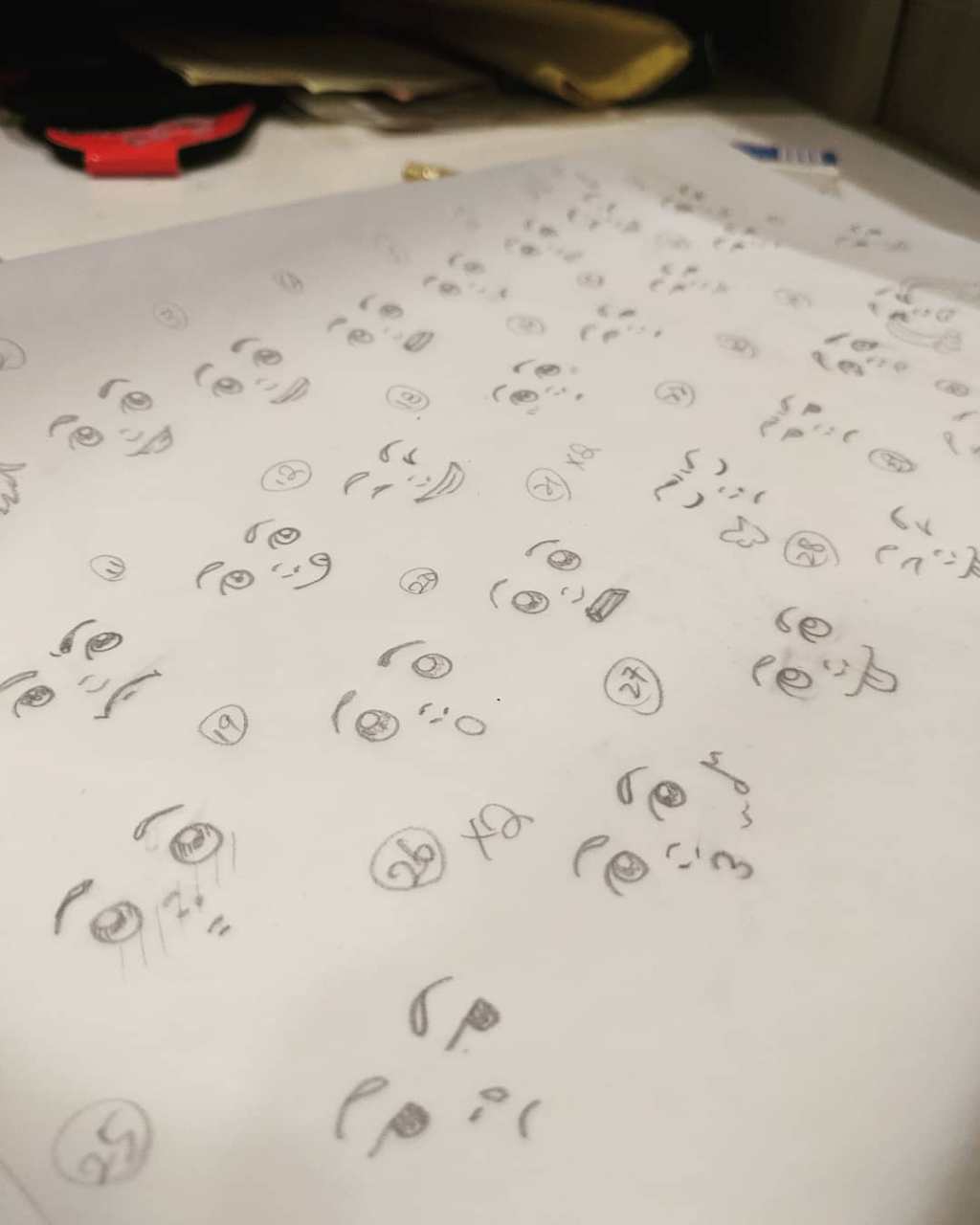
I used to feel a little guilty every time I came across an unfinished sketchbook on my shelf. You know the ones—half-filled pages, some torn out, sticky notes falling out the sides. Some start with big energy and beautiful intention… and then somewhere along the way, life happens. Work piles up. My attention gets pulled in a hundred different directions. The sketchbook quietly closes—and stays closed.
For a long time, I saw these books as a sign that I wasn’t being consistent enough. That I had abandoned part of myself. But over time, I’ve come to realize that each of these “abandoned” sketchbooks holds something incredibly valuable: a record of who I was, where I was mentally and emotionally, and what I was trying to process at that time.
Sketchbooks are more than places to draw. They’re visual diaries. They’re time capsules. And honestly? They’ve taught me more about myself than I expected.
A Sketchbook Doesn’t Have to Be Finished to Be Meaningful
Some of my sketchbooks only have 10 or 15 pages filled, and yet when I flip through them, they bring me right back to that version of myself. There’s one from a time I was feeling stuck in my career—every drawing is tentative, hesitant, full of unfinished ideas and scribbled notes in the margins. I wasn’t trying to make “good” art. I was trying to work through what I couldn’t say out loud.
Another sketchbook is full of soft, slow pages—leaves I drew during long walks, little objects from my home, quotes I needed to hear. I was grieving something personal then, and while I wasn’t always aware of it at the time, my sketchbook became a safe place to let that emotion land.
That’s the thing about sketchbooks—they don’t just show what we draw. They reflect why we draw.
Even the ones I didn’t finish have purpose. They’re not failures. They’re fragments of a much larger picture.
The Mental Health Side of Sketchbooking
I never set out to use sketchbooks as a form of mental health care, but looking back, they’ve definitely played that role.
Sketching gives me structure when I feel ungrounded.
It gives me quiet when my brain won’t stop spinning.
It gives me expression when words don’t feel like enough.
There’s something deeply therapeutic about putting pencil to paper—whether it’s a detailed drawing, a chaotic scribble, or a quick burst of journaling alongside a doodle. It’s all valid. It’s all yours.
When I don’t have the energy to talk through something, I draw it.
When I’m feeling overwhelmed, I turn off my phone and just fill a page.
When I’m disconnected from myself, I start by drawing my hands, just to say: I’m still here.
I’ve had students unknowingly use sketchbooks this way too. They’ll draw the same symbol over and over again. Or create characters who clearly carry something they’re struggling to name. Sometimes their pages say more than they’re ready to admit—and that’s okay. The sketchbook holds it for them.
Your Sketchbook as a Visual Timeline
One of the most beautiful things about keeping a sketchbook—abandoned or not—is that it becomes a visual timeline of your life. You can literally flip through the pages and see how your mindset, mood, and skills have shifted over time.
You’ll see:
- The seasons you were bold and experimental
- The seasons where everything felt gray and heavy
- The growth, even if it felt slow
- The repeating themes or obsessions you keep coming back to
- The doodles that accidentally became breakthroughs
That’s not just artistic growth—that’s personal evolution.
It’s wild to think a simple drawing habit can show you that. But it does.
Starting Again (Without the Shame)
If you’re like me and have a few too many half-finished sketchbooks lying around, here’s your permission slip: you are allowed to start again. And again. And again.
There is no shame in picking up a “failed” sketchbook and giving it new life—or in starting a brand-new one with a totally different purpose. The book isn’t judging you. It’s just waiting.
Maybe your next sketchbook is only for self-reflection.
Maybe it’s where you draw your dreams or your routines.
Maybe it’s chaotic and messy and full of mistakes—and maybe that’s exactly what you need.
There’s no rule that says every sketchbook has to be a masterpiece. Let it be what you need it to be.
Tips to Turn Sketchbooking Into a Mindful Habit
If you’re trying to reconnect with your sketchbook in a more mindful way, here are a few gentle strategies that have helped me:
Set a low-pressure goal.
One page a week. One doodle a day. One moment of stillness before bed. Keep it doable.
Write alongside your drawings.
Jot down what you were feeling that day. A quote you heard. A memory that popped up. It gives context and turns your sketchbook into a living journal.
Use it to reflect, not just create.
Don’t worry about making something pretty. Use the page to ask yourself a question and then draw freely, letting your subconscious respond.
Leave room for messy pages.
Tear out the ones that bother you or cover them with sticky notes. Turn them into collages. There’s no such thing as wasting a page if it brought you clarity.
Talk to your future self.
Write little notes in the margins: “You were really tired today but showed up anyway.” or “You hated this drawing but didn’t give up.” Those notes matter.
Final Thoughts: Your Sketchbook is a Mirror
If I’ve learned anything from my pile of abandoned sketchbooks, it’s this: they’re not about being productive. They’re about being present.
They are mirrors of our inner world—our moods, our milestones, our messiness.
They tell stories we don’t always have the words for.
They catch the parts of us that feel too quiet to say out loud.
They document the ordinary moments we’ll one day look back on and realize were actually extraordinary.
So here’s your reminder:
Pick up your sketchbook.
Not to impress anyone. Not to be perfect.
But to listen to yourself. To be with yourself.
To leave a mark that says, “I was here.”
You don’t have to fill it all at once.
You don’t even have to finish it at all.
Just start.
One page at a time.
One feeling, one doodle, one moment of self-discovery at a time.

 123ArtAppetit
Leave a comment